Or is the real scam the rush?
Thesis: Australia has legislated net-zero by 2050 and is racing to cover the country in wind and new transmission. Meanwhile we keep exporting coal to nations still building coal power. The global math says our domestic wind build barely shifts world emissions, yet the environmental and bill impacts land here at home. DCCEEW
1) The global-math check (why the symbol doesn’t match the scale)
Australia is ~1% of global CO₂. Even heroic cuts here move the world total by about a percentage point; the rest depends on what the big emitters do. That doesn’t mean “do nothing,” but it does mean honesty about the scale of benefit from domestic megaprojects. Our World in Data
At the same time, we remain a top coal exporter (world’s largest in metallurgical coal; second in thermal in 2021–22), with India among the key destinations—while India is planning ~80 GW more coal capacity by 2032. So we export the fuel, then rush to offset at home with wind farms whose global effect is marginal. Geoscience AustraliaIEAPress Information Bureau
2) The cost nobody sees on the billboard
Wind in remote areas needs big new transmission. AEMO’s 2024 Integrated System Plan (ISP) estimates $122 billion (annualised to 2050) in transmission investment to carry remote renewables to cities—before distribution upgrades. Those costs wash into bills. aemo.com.au
Regulators meanwhile warn household power bills in the eastern states are set to rise (up to ~9%), driven by wholesale and network costs. Whatever the politics, consumers are feeling the squeeze. Reuters
3) Variability is real (and planners know it)
Australia saw extended low-wind periods in 2024—“renewable droughts”—that pushed up wholesale prices. AEMO’s market reports flag the same dynamic: when wind slumps, the system leans hard on hydro, gas and imports. Firming is essential and costly. aemo.com.au
Even at the largest wind project here—the MacIntyre Precinct (~1.0 GW)—nameplate isn’t what you get on a still night. Average output follows weather, not the plaque on the substation. acciona.com
4) Sovereignty & supply chains (8,000 parts, made elsewhere)
A modern turbine has 8,000+ components. Australia currently has limited local manufacturing; most big components (blades, nacelles) are imported. If we’re going to spend tens of billions, a sovereign supply chain should be part of the deal. docs.nrel.gov
5) Whales, birds, and the ocean
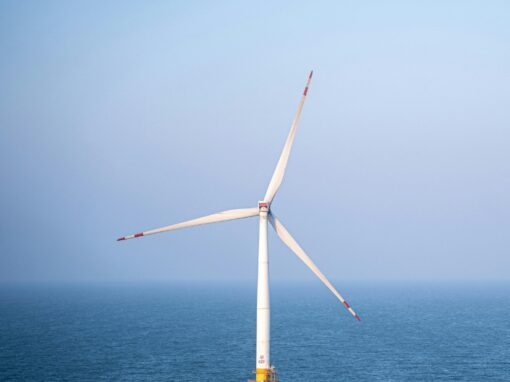
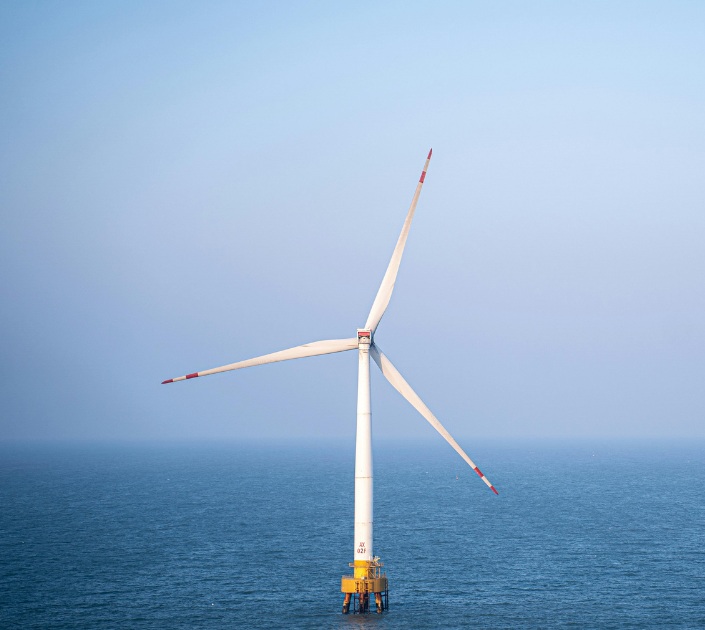
Can offshore wind be done well? Maybe—but Australia’s own environment department says seabird risks exist and must be mitigated; Senate evidence reviews also highlight marine uncertainties (migrating whales, underwater noise). Projects like Star of the South have begun multi-year baseline surveys—good, but science must set the pace, not vice-versa. DCCEEWParliament of AustraliaStar of the South
So… where’s the “scam”?
Australia has legislated net-zero by 2050. But the current crash rollout of wind, transmission and imports is being sold as salvation while we still export coal and our domestic build barely nudges global totals. The cost and ecological burden land here at home.
The real issue
- Scale honesty: Australia is ~1% of global CO₂. Our domestic mega-projects have tiny global impact unless the largest emitters also change.
- Cost honesty: remote wind needs long new transmission and firming. Those costs flow into bills.
- Ecology honesty: offshore zones intersect whale migration and seabird routes; baseline science is incomplete.
- Sovereignty honesty: a turbine has ~8,000 parts; most are imported. If we’re spending tens of billions, where are the Australian jobs?
Pause. Prove. Protect. (MEG8 stance)
A) Stop the rollout — call a Royal Commission
A Royal Commission with full powers to compel documents and testimony across:
- System economics: true, audited costs for transmission, firming, curtailment, and bill impacts.
- Environmental integrity: independent marine and avian studies; mapping against whale corridors; seasonal shutdown rules; cumulative-impact analysis (not project-by-project silos).
- Sovereign capability: feasibility and timelines to localise manufacturing (towers, switchgear, maintenance), and honest risk on relying on imports.
- Risk & accountability: who carries overruns, decommissioning, and blade-waste liabilities?
Until the Commission reports, pause new approvals in sensitive marine zones and major transmission corridors.
B) Back Australian innovation — magnetic electric generation
Instead of spending almost exclusively on imported hardware, fund home-grown generation R&D — including magnetic-electric generator concepts (e.g., Infinity Sav-style systems and other advanced magnetics).
What we’re asking for:
- An Australian Advanced Magnetics Program (AAMP): $X over Y years, open to universities, startups and SMEs.
- Independent testing in NATA-accredited labs with open data:
- calibrated input/output power, uncertainty budgets, continuous run tests, safety and thermal limits;
- third-party replication before any public performance claims.
- Stage-gate pilots: TRL milestones (bench → containerised prototype → 100 kW demo → 1–5 MW pilot), with transparent go/no-go criteria.
- Grid pathway: standards, protection studies, and interoperability testing so promising tech can integrate without compromising stability.
We’re not asking anyone to take a leap of faith. We’re asking for serious, independent engineering so Australia can lead — not just buy.
C) Fix rooftop solar congestion (now)
Midday “minimum demand” and export limits are telling households their clean power isn’t wanted. Solutions exist:
- Dynamic export limits (per feeder) instead of blunt zero-export caps.
- Neighbourhood/community batteries to soak midday excess and discharge at peak.
- Tariff reform: time-varying feed-in + orchestration payments for smart inverters, hot-water shifting, and EV/daytime loads.
- VPP enrolment made simple: pay households to let retailers/aggregators absorb and shift their solar.
- Standards tune-up: enforce best-practice inverter settings (Volt-Var/Volt-Watt) and fast fault-ride-through, with clear guidance from DNSPs.
If we treat households as partners, we free capacity, cut peaks, and reduce the need for overbuilt poles and wires.
What we’re asking you to support
- Royal Commission into the renewable rollout before further ocean or transmission approvals.
- Investment in Australian ingenuity, especially advanced magnetic-electric generation, verified by independent labs.
- A fair grid for households, with dynamic exports, local storage, and real value for the solar Australians already paid for.
If the cure ignores the math and the ecology, it becomes a mirage — costly at home, negligible to the world. MEG8 stands for truth-telling, science-first stewardship of land and sea, and Australian-made solutions.